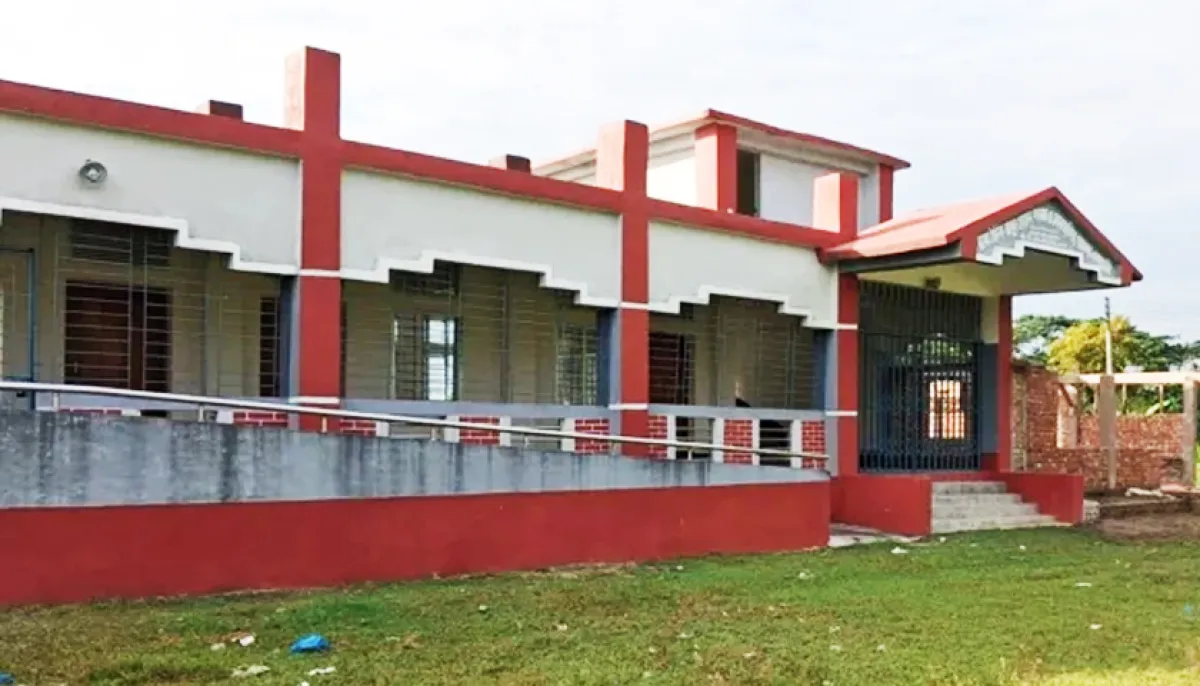
Low education spending, teacher recruitment irregularities, weak classroom teaching and growing inequality are among the major factors affecting the country’s secondary education system.
Bangladesh’s secondary education system is facing a deepening crisis, with declining examination results and growing concerns about students’ actual skills. Low public investment, teacher shortages, recruitment irregularities and an outdated approach to learning have contributed to the problem.
The crisis extends beyond examination results. Many students struggle with mathematics, English, practical knowledge and critical thinking despite spending years in school. Limited access to quality education also affects students from poor families and rural communities more severely.
Bangladesh’s Secondary Education Performance Raises Concerns
Recent examination results have raised questions about the quality of secondary education in Bangladesh. According to the information provided, the Secondary School Certificate (SSC) pass rate fell to 62.25 percent in 2026, its lowest level in 19 years.
The pass rate has declined considerably since the exceptional results recorded during the COVID-19 pandemic. It stood at 93.58 percent in 2021 before falling to 87.44 percent in 2022 and 80.39 percent in 2023. Although it increased slightly to 83.04 percent in 2024, it dropped again in subsequent years.
The figures point to wider challenges in the education system. The problem is not simply how many students pass examinations but whether they gain the knowledge and skills needed for higher education and employment.
Students Are Falling Behind in Essential Skills
The World Bank’s Human Capital Index data cited in the supplied information highlights a serious gap between years spent in education and actual learning outcomes.
A Bangladeshi student who completes 10 years and two months of schooling, up to Grade 11, reportedly achieves learning outcomes equivalent to those of a sixth-grade student by international standards. In 2017, the comparable level was equivalent to a seventh-grade student.
This suggests that students are spending more time in classrooms without achieving the expected level of learning. The gap raises concerns about teaching methods, curriculum quality and the effectiveness of classroom assessments.
The problem is particularly visible in mathematics. A 2023 national assessment by the Directorate of Secondary and Higher Education (DSHE), involving 30,000 students, found that the proportion of eighth-grade students performing poorly in mathematics increased from 22 percent in 2019 to 47 percent in 2023.
Teacher Shortages and Weak Teaching Quality
A shortage of qualified teachers is one of the major challenges facing secondary schools. According to a UNESCO report cited in the supplied information, only 55 percent of secondary school teachers in Bangladesh have the minimum required qualifications.
The shortage of subject-specific teachers is particularly serious in mathematics, science, English and Bangla. In some schools, teachers are required to teach subjects outside their areas of expertise. This can make it difficult for students to understand important lessons.
Large classroom sizes create another challenge. When 60 to 70 students attend a single class, teachers have limited opportunities to support individual learners, identify weaknesses and provide additional guidance.
Vietnam offers a useful comparison. Its education system places strong emphasis on teacher training and effective school management. The supplied information states that 95 percent of Vietnamese children aged 10 can perform four-digit addition.
Education Costs and Dependence on Private Coaching
The growing cost of education is putting additional pressure on Bangladeshi families. Many students depend on coaching centres and private tutors because they cannot receive sufficient academic support in their schools.
A 2024 study by the Campaign for Popular Education (CAMPE), according to the supplied information, found that household spending on secondary education increased by 51 percent during the first six months of 2023 compared with the same period in 2022.
A UNESCO study also found that families in Bangladesh bear 71 percent of education costs themselves. This places a particularly heavy burden on low-income households.
The situation creates an unequal learning environment. Students from wealthy families can afford additional lessons, while those from poor families often depend entirely on classroom teaching.
Dropout Rates Highlight Growing Education Inequality
Many students leave the education system before completing higher secondary education. According to Bangladesh Education Statistics 2023, the secondary-level dropout rate stands at 33 percent.
The completion figures become more concerning at higher levels. The primary education completion rate is 83.7 percent, while the rate falls to 69.3 percent at the lower secondary level.
Only 43.9 percent of students complete higher secondary education, according to the supplied figures. The situation is worse for students from poor families, whose completion rate is just 21 percent.
There is also a clear gap between rural and urban areas. Higher secondary completion stands at 42 percent in rural areas, compared with 49 percent in urban areas.
These differences show that access to education does not guarantee equal opportunities. Poverty, geographical disadvantages and limited educational facilities continue to affect students’ chances of completing their studies.
Bangladesh Spends Far Less on Education Than Recommended
Insufficient public investment is another major concern. UNESCO recommends that countries allocate at least 6 percent of GDP or 20 percent of their national budgets to education.
Bangladesh remains far below these recommended levels. The education allocation stood at 1.69 percent of GDP in the 2024-25 fiscal year, compared with 1.76 percent in the previous fiscal year.
World Bank data cited in the supplied information also places Bangladesh among the lowest-spending countries in terms of education expenditure as a share of GDP.
The comparison with neighbouring countries highlights the gap. India has spent more than 4 percent of GDP on education in recent years, while Nepal has also maintained spending above 4 percent. Bhutan’s education expenditure has ranged between 4 percent and 7.2 percent of GDP.
Other countries have also maintained higher investment. Finland spends around 6.4 percent of GDP on education, while South Korea spends approximately 4.7 percent. Malaysia’s spending stands at around 3.9 percent.
Senegal provides another important comparison. Despite having a lower per capita GDP than Bangladesh, it spends a much larger share of its national income on education.
The figures suggest that economic capacity alone does not determine education spending. Government priorities and long-term investment decisions also play an important role.
Recruitment Irregularities and Political Influence
The quality of education also depends on the integrity of teacher recruitment. Concerns about corruption, political influence and irregular appointments have raised questions about whether recruitment processes always select the most qualified candidates.
According to the supplied information, 442,644 teachers work in government educational institutions. Around 59 percent were recruited during the past 15 years, representing approximately 261,136 appointments.
The information also highlights allegations of question paper leaks in university admission tests and public service examinations. Such incidents have damaged public confidence in the country’s examination and recruitment systems.
Teacher recruitment must be based on professional qualifications, subject knowledge and teaching ability. When political influence or bribery affects appointments, educational institutions risk losing capable teachers.
Finland provides a different model. Teaching is considered a highly respected profession, and teachers must complete advanced academic and professional training. Competitive selection helps maintain professional standards.
A Large Part of the Education Budget Remains Unused
Increasing education spending alone will not solve the crisis if institutions cannot use allocated funds effectively.
The supplied information states that approximately 20 percent of the annual education budget remains unused because of institutional weaknesses and staff shortages.
There are also concerns about how development funds are distributed. Of the 58 development projects under the Secondary and Higher Education Division, 28 involve building construction.
School infrastructure is important, but investment must also support teaching quality, learning materials, teacher development and digital facilities.
A modern school system needs more than buildings. It needs qualified teachers, effective classrooms and resources that help students develop practical skills.
The Gap Between Education and Employment
Another major weakness is the limited connection between the curriculum and the job market. Many students complete years of education without gaining the practical skills employers require.
The supplied information states that unemployment among young people with tertiary education increased from 7 percent in 2013 to 31.5 percent in 2022.
This trend raises questions about the relevance of academic programmes and the effectiveness of career preparation. Students need more than examination certificates to compete in an increasingly skills-based economy.
South Korea offers an important example of long-term educational development. Its investment in teachers, technology and industry-focused learning helped build a skilled workforce and support economic growth.
Bangladesh needs a similar focus on practical knowledge, technical education and problem-solving abilities.
What Bangladesh Must Do to Improve Secondary Education
Addressing the crisis requires long-term reforms across the education system. Increasing the budget, improving teaching standards and ensuring equal opportunities must become national priorities.
Increase Education Spending and Improve Budget Management
Bangladesh needs a clear roadmap to raise education spending towards at least 4 percent of GDP as an initial target. The government should also strengthen financial management to ensure that allocated funds are used properly.
More resources should go towards teacher training, learning materials, digital infrastructure and classroom improvement. Investment decisions must focus on students’ learning outcomes rather than infrastructure alone.
Ensure Transparent and Merit-Based Teacher Recruitment
Teacher recruitment must be free from political interference, bribery and favouritism. Candidates should be selected according to subject knowledge, academic qualifications and professional teaching ability.
Existing teachers also need regular training, particularly in mathematics, science and English. Better salaries, professional recognition and career opportunities can help attract talented graduates to teaching.
Reform Examinations and Classroom Teaching
The education system must move away from excessive dependence on memorisation. Students should be assessed on their ability to understand concepts, analyse information and solve problems.
However, examination reform alone will not be enough. Teachers need training in modern classroom methods that encourage students to ask questions and develop independent thinking.
Bangladesh should also participate more actively in international learning assessments, including the Programme for International Student Assessment (PISA). Such assessments can help identify weaknesses and compare learning outcomes with other countries.
Reduce Rural and Urban Education Gaps
Rural schools need better facilities, reliable electricity, internet access and qualified teachers. The government should introduce incentives for skilled teachers to work in underserved areas.
Schools with particularly poor examination results need special attention. The supplied information identifies 48 schools with zero pass rates in 2023, most of them located in rural areas.
These institutions require targeted support, including teacher development, improved management and regular monitoring.
Prevent Child Marriage and Reduce Dropouts
Keeping children in school requires financial and social support. Poor families need access to scholarships, stipends, free textbooks and essential learning materials.
Girls also need a safe and supportive environment to continue their education. Preventing child marriage and reducing financial pressure on families are important parts of this effort.
Expand Technical and Vocational Education
Secondary education should prepare students for both higher education and employment. Technical and vocational programmes can help students develop practical skills alongside academic knowledge.
Bangladesh should strengthen links between schools, training institutions and industries. This would help students understand employment opportunities and select relevant career pathways.
Reduce Dependence on Private Coaching
Schools must provide effective classroom teaching so students do not need expensive private lessons to understand their subjects.
Teachers should receive the support and resources needed to complete lessons properly. Stronger institutional rules are also necessary to address conflicts of interest involving teachers who provide private tuition.
Encourage Families and Communities to Support Learning
Education reform is not only the responsibility of the government. Families, teachers and communities also have important roles.
Parents should encourage children to understand lessons rather than focus only on examination marks. Schools and communities should also work together to prevent child marriage and reduce dropout rates.
Bangladesh Needs Long-Term Commitment to Education Reform
The deterioration of secondary education in Bangladesh is not the result of one isolated problem. Low public investment, weak teaching standards, recruitment irregularities, expensive private coaching and unequal access have created a complex challenge.
International examples show that sustained investment, qualified teachers and practical learning can improve educational outcomes. Finland, Vietnam and South Korea demonstrate different approaches to building stronger education systems.
Bangladesh already has a clear set of priorities for reform. It needs transparent recruitment, better classroom teaching, stronger financial management and a curriculum that prepares students for real-life challenges.
The future of the country depends partly on the quality of education received by today’s students. Giving them certificates is not enough. They must develop the knowledge, skills and confidence needed to contribute to society and the economy.
The next step must be a sustained commitment to genuine educational improvement, with student learning outcomes placed at the centre of every major policy decision.