Applications for undergraduate studies at Dhaka University open at noon on November 11 and close at 11:59 p.m. on November 25. The five placement tests will be held during December, and classes will begin on March 28, 2027.
The university finalized these details at a meeting of the General Admissions Committee on August 2, chaired by the Vice-Chancellor, Professor Dr. A. B. M. Obaidul Islam, and published them in a press release that same day. Everything mentioned below is taken from that press release.
The five units and their dates
- IBA unit — 5 December, 10:00am to 12:00pm
- Science unit — 12 December
- Arts, Law and Social Sciences unit — 19 December
- Charukala unit — 22 December, general knowledge and drawing
- Business Studies unit — 26 December
All units, except IBA, are taught from 11:00 to 12:30. Four of the five units are taught on Saturdays; Charukala is taught on Tuesdays.
An important detail: Dhaka University has used descriptive names for the units in this notice, instead of the A, B, and C labels that many students still look for. Science is the former unit A, Arts is B, and Business Studies is C.
Where you sit the exam
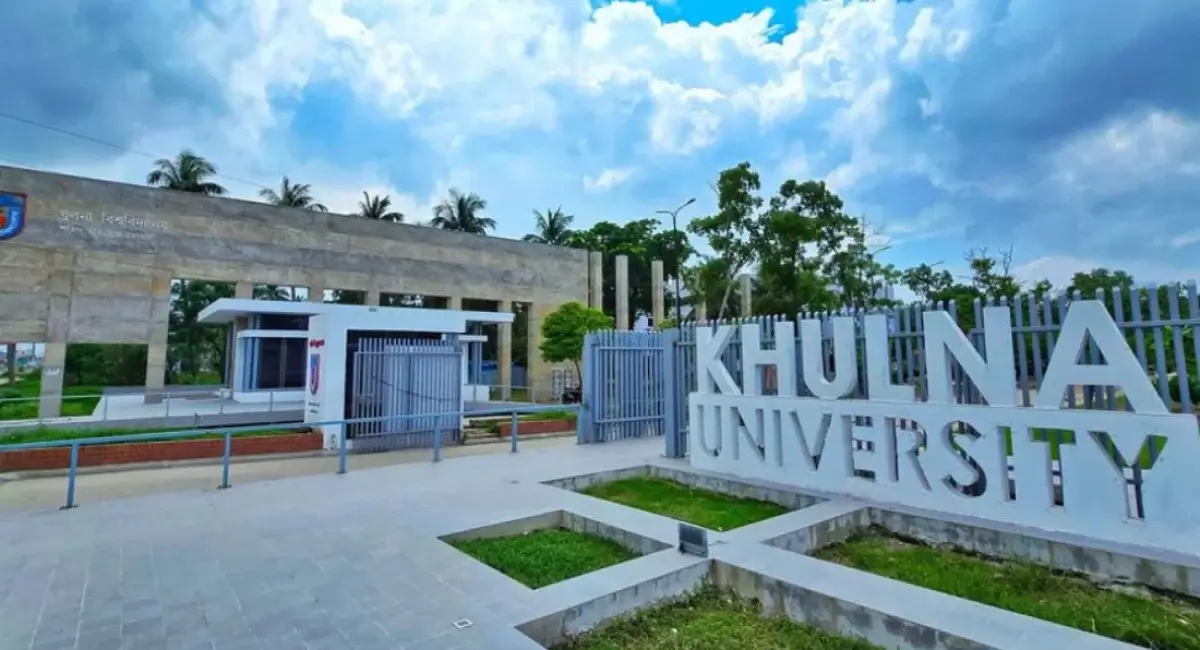
The Science, Arts, and Business Studies tests are administered in Dhaka and at seven divisional centers: Rajshahi University, Chattogram University, Barishal University, Khulna University, Shahjalal University of Science and Technology, Bangladesh Agricultural University in Mymensingh, and Begum Rokeya University.
The Charukala and IBA tests are administered only in Dhaka. Candidates for these two tests should plan their travel accordingly.
How you are scored
The assessment is based on a maximum score of 120 points: 100 from the entrance exam and 20 cumulatively from the SSC and HSC exam results.
Within the exam, most units consist of 60 multiple-choice questions and 40 written questions, with 45 minutes allotted for each part. The Charukala unit consists of 40 multiple-choice and 60 drawing questions, with 30 and 60 minutes respectively. The IBA unit consists of 70 multiple-choice and 30 descriptive questions, with 90 and 30 minutes respectively.
English-speaking candidates taking the Science unit will receive a different exam, tailored to their specific curriculum. This detail has not been widely publicized and is important for those preparing with a different curriculum.
The cross-stream rules, which people get wrong
You must have passed the SSC or its equivalent between 2021 and 2024, and the HSC or its equivalent by 2026. In addition, GPA thresholds vary depending on your field of study, and all figures include the fourth subject.
Science unit — combined GPA 8.0 across SSC and HSC, with at least 3.5 in each. Humanities and business candidates from the higher secondary and madrasah boards may also apply, at a combined 7.5 with at least 3.0 in each.
Arts, Law and Social Sciences unit — combined 7.5 with at least 3.0 in each. Science candidates need a combined 8.0 with at least 3.5; business candidates need 7.5 and 3.0.
Business Studies unit — combined 7.5 with at least 3.0 in each. Science candidates need 8.0 and 3.5; humanities candidates need 7.5 and 3.0.
Charukala unit — combined 6.5 with at least 3.0 in each.
This pattern is worth reading twice. Applying to a career outside your field of study doesn’t close doors, but it generally raises the bar, and a science student switching to arts or business faces a higher threshold than students already in those fields.
Rising Barta will report the detailed DU admission circular, including fees and seat numbers, when the university publishes it.