A retired head teacher says Bangladesh must improve teachers’ pay, rights, training and working conditions as the profession marks its 60-year international commitment.
World Teachers’ Day will be observed on October 5, 2026, with the 60th anniversary of the 1966 ILO-UNESCO Recommendation concerning the Status of Teachers. A retired head teacher says the anniversary should also prompt Bangladesh to review how it protects and supports teachers.
The theme for this year, according to the information provided by the author, is “Standing beside teachers: protecting the profession, enhancing its dignity, and shaping the future for sixty years.” The author says the occasion should go beyond formal events and focus on the rights and working conditions of teachers.
The 1966 recommendation set out international principles on the status of teachers. It called for merit-based recruitment, proper training, job security, fair pay and academic freedom. The author notes that these issues remain important for Bangladesh six decades later.
Teachers face major challenges
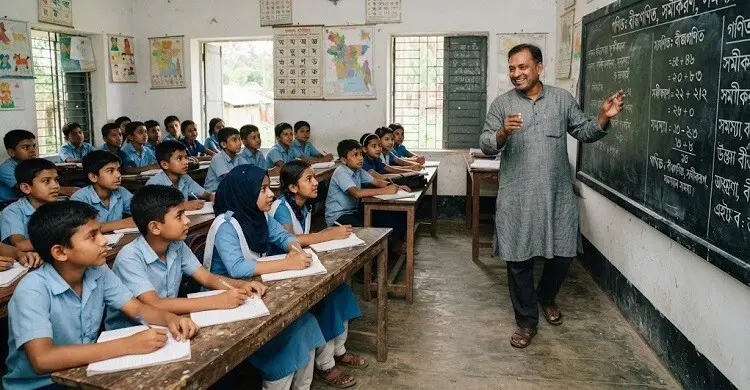
The author points to several challenges in Bangladesh’s education sector. At the primary level, one teacher is said to manage about 40 to 50 children. The article also states that 40 percent of secondary schools lack trained teachers in mathematics, science and English.
The author further raises concerns about research conditions at universities. The central argument is that buildings, curricula and technology cannot replace teachers in the education process.
Technology can provide information, the author says, but teachers remain responsible for helping students develop values, curiosity and empathy.
Teachers’ rights go beyond salaries
The retired head teacher argues that teachers’ rights should include more than regular pay. The proposed rights include fair and timely remuneration, social protection, academic freedom, freedom of expression and a safe working environment.
The author also calls for transparent promotion and transfer systems. Teachers, the article argues, should have opportunities to take part in education policy decisions.
The author says teachers should not be used for election-related work, census duties or other non-teaching administrative tasks. Such duties, the author argues, can weaken the professional dignity of teachers.
Teachers also have responsibilities
The article says teachers must also meet professional responsibilities. These include lifelong learning, providing quality and non-discriminatory education, keeping up with new curricula and technology, and helping students who face difficulties.
The author also argues that teachers should uphold democratic values and ethics in the classroom. At the same time, the author says the state has a major role in creating the conditions needed for teachers to maintain professional standards.
Five proposals for the government
The retired head teacher has proposed five steps for the government.
The first is an integrated national teacher policy and a separate pay structure covering teachers from primary schools to universities. The author also calls for changes to disparities under the MPO system and a reduction in the gap between government and private institutions.
The second proposal is greater transparency in recruitment and promotion. The author recommends a separate Teacher Recruitment Commission, modelled on the Public Service Commission, with recruitment based fully on merit.
The third proposal is to remove teachers from non-teaching duties. The author also calls for a Teacher Protection Act to address political interference and harassment in classrooms.
The fourth proposal focuses on training and welfare. The author calls for annual training, housing support, research allowances and security after retirement. The article also proposes a separate education-budget allocation for teacher development.
The fifth proposal focuses on preparing teachers for technological and social changes. The author says teachers should receive training in digital literacy, climate education and mental health.
A focus on teachers’ dignity
The author says the global demand for teachers makes the issue more urgent. The article cites an estimate that the world will need another 44 million teachers by 2030 to achieve the Sustainable Development Goals.
For Bangladesh, the author argues that improving teachers’ professional status requires action on both income and dignity. The article calls for policy changes rather than relying only on speeches or ceremonial commitments.
The author concludes that World Teachers’ Day should be used as an opportunity to strengthen the teaching profession in Bangladesh. The focus, the author says, should be on protecting both the pocket and dignity of teachers.
Author: A retired head teacher.