Subheadline: Prime Minister Tarique Rahman says the government aims to strengthen primary education, expand rural healthcare and develop skilled workers for overseas employment.
TOKYO, October 28: Bangladesh plans to introduce Japanese and several other foreign languages in schools from next year, alongside efforts to strengthen primary education, Prime Minister Tarique Rahman has said.
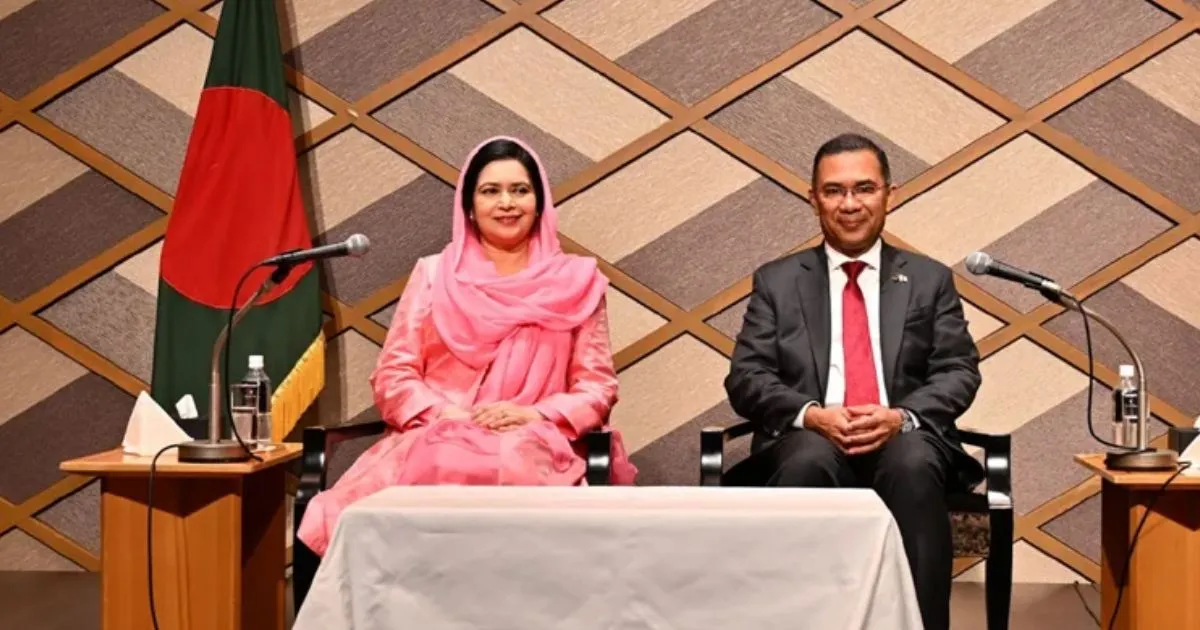
Speaking at a meeting with Bangladeshi expatriates at the New Otani Hotel in Tokyo on Wednesday evening, he said students could learn Japanese, German, French or other foreign languages in addition to English. The plan aims to improve their access to higher education and employment at home and abroad.
The prime minister said work had begun to prepare the language-learning plan. He also stressed the need to improve basic education and give students more opportunities to take part in sports, arts and cultural activities.
Foreign languages to expand career opportunities
Rahman said students would be able to choose a foreign language based on their interests. The government expects to begin teaching Japanese and several other languages in schools from next year.
He said education should go beyond textbooks. Technical and vocational training would also receive attention to help students develop practical skills for future jobs.
According to the prime minister, stronger language skills and wider opportunities in sports and cultural activities could help students compete for higher education and employment opportunities in Bangladesh and overseas.
Upazila hospitals may get 150 beds
The prime minister also outlined plans to improve healthcare services, particularly for people in rural areas, women and children.
He said upazila hospitals currently have 50 beds each. The government plans to increase their capacity to 150 beds each over the next five years.
The plans also include introducing dialysis services at the upazila level and expanding specialised treatment for women and children. Dialysis is a treatment that helps remove waste and excess fluid from the blood when the kidneys cannot do so properly.
Rahman said better healthcare at the local level could reduce the need for rural patients to travel to district and divisional cities for advanced treatment. It could also ease pressure on major hospitals, which are facing heavy patient loads.
Government plans to recruit 100,000 health workers
Rahman announced plans to recruit 100,000 health workers to raise awareness about disease prevention and healthy living in villages.
He said at least 80 per cent of the proposed recruits would be women. They would visit households and provide information about nutrition, diabetes, heart disease, high blood pressure and healthy living.
The prime minister said greater awareness and healthier lifestyles could help reduce the spread of preventable diseases and lower pressure on the healthcare system.
Skilled workers for Japan’s labour market
The meeting also covered employment opportunities for Bangladeshi workers in Japan. Rahman said Bangladesh needed to prepare workers with proper training, Japanese language skills and an understanding of Japanese culture.
He said these steps would help Bangladeshi workers maintain their position in Japan’s labour market over the long term.
The prime minister also discussed possible employment opportunities in Bangladesh for expatriates who speak Japanese. He said advertisements had been published to recruit Japanese language teachers, but the number of applications was lower than expected.
He encouraged Japanese-speaking expatriates to contact the Ministry of Education or the Ministry of Expatriates’ Welfare and Overseas Employment to explore possible initiatives.
Call for joint efforts to develop Bangladesh
Rahman urged Bangladeshis living at home and abroad to work together for the country’s development. He said people could contribute to the national economy, education, healthcare and workforce development from their respective positions.
He added that a more developed Bangladesh would benefit citizens both at home and overseas.
The meeting was attended by his wife, Dr Zubaida Rahman, along with party leaders and activists. Mir Rezaul Karim Reza, president of Japan BNP, chaired the meeting.
The government plans outlined at the meeting cover education, healthcare and overseas employment. The proposed school language programme is expected to begin next year, while the planned hospital expansion and recruitment of health workers form part of the government’s broader development agenda.