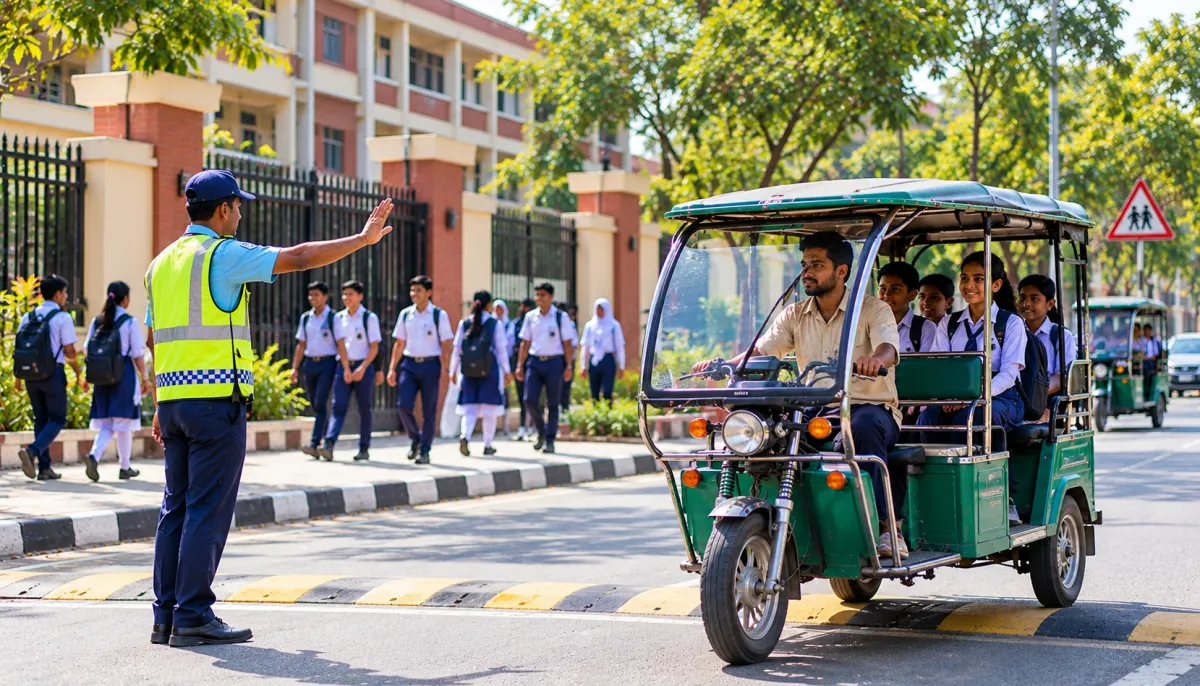
Subheadline: New regulations published in the Bangladesh Gazette also restrict e-rickshaw routes, passenger numbers, mobile phone use and road access.
E-rickshaws must not exceed 15 kilometres per hour near educational institutions, hospitals, religious places of worship and densely populated areas under new regulations published in the Bangladesh Gazette on Thursday. The rules aim to control their movement and improve road safety in busy areas.
The regulations set out where e-rickshaws can operate, how drivers must use roads and how many passengers they can carry. They also introduce provisions for route permits, zone-based operation and driver training.
New speed limits in busy areas
Under the new rules, e-rickshaws must maintain a maximum speed of 15 kilometres per hour in designated important and densely populated areas. These include roads near schools, hospitals and religious places of worship.
The speed limit is intended to help manage traffic and protect road users in areas where many people travel on foot. Drivers must follow the prescribed limit in these locations.
E-rickshaws banned on several major roads
The regulations prohibit e-rickshaws from operating on national highways, expressways, elevated expressways and major bus routes or corridors. They are also barred from roads that the authorities restrict from time to time.
E-rickshaws cannot operate on footpaths. Drivers must keep to the left lane and must not use mobile phones while driving. They are also prohibited from overtaking or changing lanes in violation of traffic rules.
Passenger limits and restrictions on goods
The number of passengers an e-rickshaw can carry will depend on its size. Under the regulations, a vehicle may carry no more than two or four passengers, excluding the driver.
E-rickshaws cannot carry commercial goods, except for luggage that passengers can carry by hand. The rules also prohibit horns with a sound intensity above 40 decibels.
Authorities to set routes and zones
The relevant authorities and traffic department will jointly determine the roads where e-rickshaws can operate. Within city corporation areas, the authorities will organise routes by zones.
An e-rickshaw assigned to one zone will not be allowed to operate in another zone. The relevant city corporation and traffic department will finalise the arrangements, including the number of vehicles allowed in each zone, their approved routes and their assigned colours.
These measures will establish a framework for managing e-rickshaw movement within city corporation areas. The permitted routes and vehicle numbers will depend on the arrangements finalised by the relevant authorities.
Driver training may be arranged
The regulations also allow the authorities to arrange driver training through recognised training institutions. The training may cover traffic laws, road safety, battery care, vehicle maintenance and related subjects.
The new rules address several aspects of e-rickshaw operation, from speed and passenger safety to route management and driver conduct. Their implementation will depend on the relevant authorities and traffic department applying the prescribed rules.
The next step is for the responsible authorities to finalise the applicable routes, zone arrangements, vehicle limits and other operational details under the regulations.