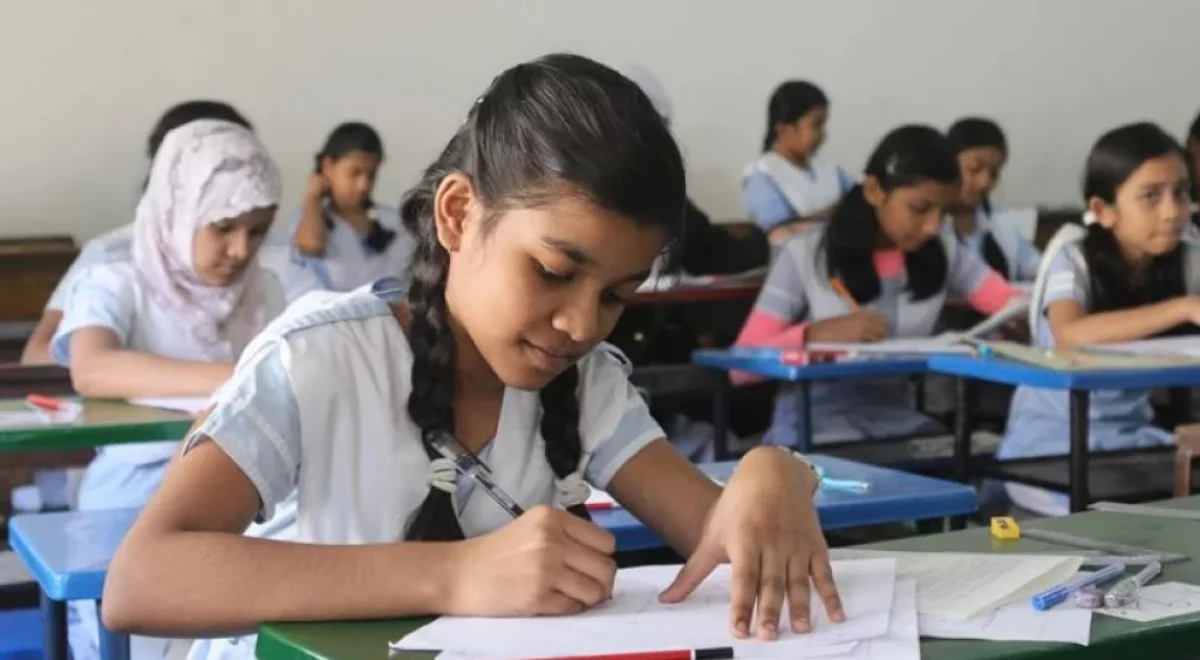
The decision to hold the HSC and equivalent exams as scheduled was not taken lightly, but rather based on weather forecasts and the opinions of district and local administrations. This was explained by the Minister of Primary and Mass Education, Dr. A. N. M. Ehsanul Haque Milon, in response to questions about why the exams were held during the days of heavy rain.
The questions had intensified since Monday, when students in several districts had difficulty reaching their exam centers due to the rain and flooded streets. The minister’s response was that the government was monitoring the situation closely and that the information indicated the exams could proceed.
How the Decision Was Made
According to the minister, the Ministry of Education closely monitored the overall situation until 5 p.m. the day before the exam. During that time, the ministry maintained regular contact with the police superintendents of all 64 districts, the divisional commissioners of all eight divisions, the presidents of all education boards, the district and upazila administrations, and the Meteorological Department.
The information received from all parties was consistent: the weather would improve, and holding the exams would not pose any problems. The decision to proceed was made on that basis.
Only One Center Out of 2,700 Faced Trouble
The minister highlighted a telling statistic. The baccalaureate and equivalent exams are being held simultaneously in approximately 2,700 centers across 64 districts. Of these, only one—the Cumilla Government Girls’ College—experienced a temporary disruption due to flooding. Even so, immediate measures and alternative solutions allowed the exam to be completed.
In other words, according to the government, more than 99.9% of the centers operated without interruption and according to schedule.
The Chittagong Exception
The situation was different in areas where conditions were truly unsafe. Due to heavy rains and flooding, the exams were postponed in phases: first in Rangamati, Bandarban, and Khagrachhari, and subsequently across the entire Chittagong Board of Education, including exams for madrasas and technical boards in the region. The suspension extends until July 16, and these decisions were based on field reports from upazila executive officials and sub-commissioners.
This year’s HSC and equivalent exams involve 1,270,583 candidates at 2,697 centers, and all boards use the same questionnaires.
Zero Tolerance on Exam Irregularities
The minister also addressed the issue of discipline in the examination halls. A complaint has been filed regarding an incident at a Charfashion center in Bhola, where video footage is being reviewed to identify those involved. In Cumilla, a teacher was arrested for allowing a student to review exams in his place, and efforts are underway to identify the student in question.
His message was unequivocal: no irregularities in the administration of the exams will be tolerated, all complaints will be thoroughly investigated, and offenders will face legal action.
Rising Barta will continue to provide updates on the HSC 2026 exams, including the revised Chittagong timetable when it is released, so stay tuned for all the latest developments.